|
English Name:
Kit Fox Spanish Name: Scientific Name: Vulpes macrotis
Photographer: Rico Leffanta Copyright: © 2007 Rico Leffanta |
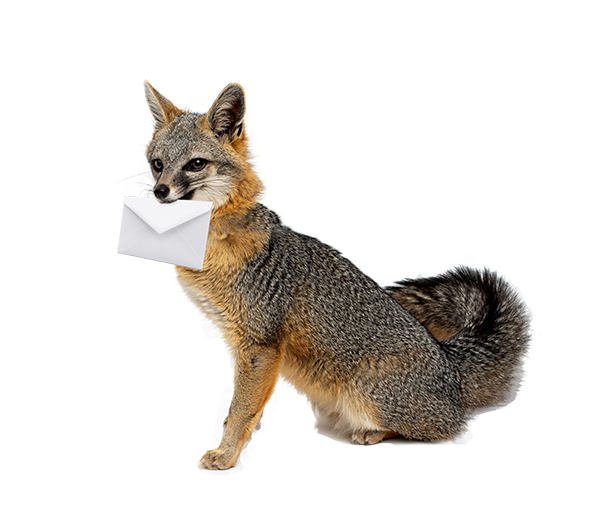
The Kit Fox (Vulpes macrotis) has a sleek, slender body, long legs and a bushy tail, which is tipped in black. The color of the coat varies from a dark buff-tan to light grey with orange-tan coloring on the sides and legs. Their underside and neck are creamy white.
Their most conspicuous adaptation is their exceptionally large, closely set ears, which help them lose body heat in their desert environment. Also, the hair is dense between their footpads protecting their paws from the heat of the desert sand.
Kit fox are found in arid areas of chaparral, desert scrub and grasslands. Kit fox may also occur in close proximity to humans in urban environments and outlying agricultural areas.
They are found between the Sierra Nevada Mountains and the Rocky Mountains, into Baja California and the North Central states of Mexico.
Kit fox populations are dropping due to hunting and destruction of their habitat. Officially they are not listed as a threatened species.
Kit fox eat small mammals such as rabbits, ground squirrels, rats, mice, birds, fish, amphibians, small reptiles, insects, grasses, and berries.
Predators of kit fox include large raptors, bobcats, coyotes, feral dogs, badgers, and humans.
Kit foxes spend most of their time in dens that either they constructed themselves or in dens that other animals such a badgers or prairie dogs have made. The dens have many entrances and exits and there is usually more than one den within their territory. As they are nocturnal, they will spend the day sleeping in the dens emerging at night to hunt.
There is some uncertainty regarding their lifespan in the wild. Some reports list a lifespan of 3 to 4 years, while others report 7 to 12 years. Chances are in the wild lifespan falls somewhere in the middle.
Weight ranges are from 3-5 pounds and length ranges are from 16-21 inches. Males are slightly larger than the females.
These are the smallest of the American foxes, and are not much larger than a domestic cat.
The Kit fox can run as fast as 25 miles per hour for short distances.